Southwark bulky waste permits for Elephant and Castle
Posted on 30/06/2026
Southwark bulky waste permits for Elephant and Castle: a practical guide for residents, landlords and businesses
If you live, manage property, or run a business in the Elephant and Castle area, bulky waste can become a surprisingly awkward issue. A sofa that won't fit down the stairs, a mattress left after a tenant move-out, a broken wardrobe in a communal hallway, or a pile of renovation offcuts after a weekend project - it all needs handling properly. That is where Southwark bulky waste permits for Elephant and Castle come into the picture, or at least where people start asking whether they need one, what it covers, and how to avoid a fine, a delay, or a lot of hassle.
This guide explains the permit question in plain English, along with the practical options available if you want the job done cleanly and without drama. We'll look at how the process usually works, who it suits, what mistakes people make, and when a professional clearance service makes more sense than leaving things to chance. If you also want to understand the wider disposal picture, it can help to compare this with broader options like general waste disposal in Elephant and Castle or full waste clearance services.
Let's face it: bulky waste is rarely about one item. It is usually a combination of timing, access, responsibility, and compliance. Get those right, and the whole thing becomes much simpler.
- Why Southwark bulky waste permits for Elephant and Castle Matters
- How Southwark bulky waste permits for Elephant and Castle Works
- Key Benefits and Practical Advantages
- Who This Is For and When It Makes Sense
- Step-by-Step Guidance
- Expert Tips for Better Results
- Common Mistakes to Avoid
- Tools, Resources and Recommendations
- Law, Compliance, Standards, or Best Practice
- Options, Methods, or Comparison Table
- Case Study or Real-World Example
- Practical Checklist
- Conclusion
- Frequently Asked Questions
Why Southwark bulky waste permits for Elephant and Castle Matters
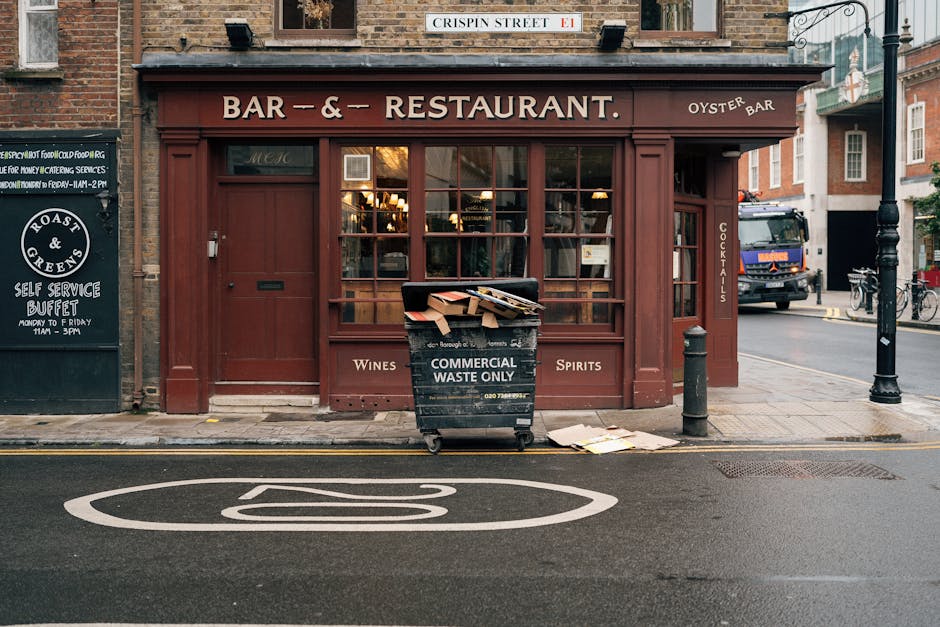
Bulky waste is the sort of rubbish that does not behave politely. It is large, awkward, often heavy, and usually too big for ordinary household bins. In Elephant and Castle, that matters even more because the area mixes flats, estates, converted buildings, commercial units, and busy streets where storage space is limited and access can be tight.
A permit or booked arrangement matters because bulky waste cannot simply be dumped on the pavement and forgotten. That creates obstruction, safety risks, and sometimes disputes with neighbours or building management. If you have ever tried to manoeuvre an old wardrobe through a narrow communal corridor at 8 a.m., you'll know exactly how quickly a simple task becomes a small logistical event.
There is also the practical side: the right permit, collection booking, or licensed disposal route helps keep the item moving to the right place rather than drifting into fly-tipping territory. And nobody wants that. Not the council, not the building manager, not the residents who must walk past it every morning.
For people in the area who are clearing more than a single awkward item, the issue often overlaps with other services too. A one-off sofa disposal might sit alongside furniture disposal, an emptying of a flat during a move, or a larger house clearance in Elephant and Castle. Once you see the wider picture, the permit question becomes easier to answer.
How Southwark bulky waste permits for Elephant and Castle Works
The phrase "bulky waste permit" can mean slightly different things depending on the situation. In practice, people usually mean one of three things:
- a local authority collection arrangement for large household items;
- a permission or booking process connected with placing items for collection;
- or, in some property or works scenarios, an access or skip-related permission that affects how bulky waste is removed.
For Elephant and Castle residents, the exact route depends on the type of waste, where it is stored, and how it will be taken away. A single mattress is handled differently from mixed builders' debris, and communal estate rules may differ from a ground-floor house with a front path. That sounds obvious, but it is where people often get tripped up.
Here is the simplest way to think about it: if your bulky waste is being removed by a council booking or an approved collection arrangement, you want to make sure the item is eligible and ready in the right place at the right time. If you are using a private clearance firm, the key issues are lawful carriage, safe loading, and proper disposal. For larger or more mixed loads, services like rubbish collection in Elephant and Castle or junk removal in SE1 and SE11 are often more flexible than trying to piece together a DIY approach.
A very common scenario goes like this: someone clears a bedroom, discovers a broken bed frame, a chest of drawers, an old desk, and a heavy mirror, then realises the lift is tiny and the street outside is already busy. At that point, the "simple" collection suddenly needs planning. Not glamorous, but very real.
Key Benefits and Practical Advantages
There are good reasons why people take the permit or booked-collection route seriously. The biggest benefit is certainty. You know what is being taken, when it will go, and who is responsible for handling it.
Other advantages include:
- Less risk of obstruction in hallways, pavements, and shared entrances.
- Cleaner compliance with local rules, estate requirements, or building management instructions.
- Better time control if you are moving out, preparing a property for sale, or turning over a rental quickly.
- Safer handling of heavy items, sharp edges, broken glass, or awkward lifts.
- More predictable disposal than leaving items to chance or waiting for "someone to sort it later".
For landlords and managing agents, this can be a real headache saver. One missed bulky item in a stairwell can sour a handover, upset neighbours, and create avoidable follow-up work. If you are dealing with a full property turnover, it is often worth considering property clearance in Elephant and Castle rather than treating everything as a one-off disposal task.
There is also a sustainability angle. Responsible disposal gives reusable items a better chance of being reused, recycled, or separated properly. That matters to plenty of residents here, especially in an area where people are increasingly conscious about waste and community cleanliness. If that part matters to you, have a look at recycling and sustainability for a broader view of how good waste handling supports the area.
Who This Is For and When It Makes Sense
This is not just for homeowners with an old sofa. In reality, Southwark bulky waste permits or equivalent arrangements can be relevant to several groups:
- Flat owners clearing out large household items.
- Tenants moving out who need to dispose of damaged or unwanted furniture.
- Landlords managing end-of-tenancy clearances.
- Estate managers dealing with shared spaces and resident requests.
- Small businesses replacing desks, shelving, or office furniture.
- Builders and decorators with mixed bulky offcuts, packaging, or old fittings.
It makes sense whenever the item is too large for standard collection, too awkward for normal bin storage, or too risky to leave outside without a proper arrangement. Sometimes the better question is not "Do I need a permit?" but "What is the safest, quickest lawful route for this item in this exact building?" That small shift in thinking saves a lot of time.
If you are clearing a loft, a basement, or a storage room with a mix of random items, a more complete solution such as loft clearance in Elephant and Castle can be more practical than arranging individual disposal pieces one by one.
Step-by-Step Guidance
If you are handling bulky waste in Elephant and Castle, a simple process usually works best. No need to overcomplicate it.
- Identify exactly what you need to remove. Make a short list. Sofa, mattress, wardrobe, broken appliance, garden bench, carpet roll, whatever it is.
- Check whether the item is household bulky waste or something more specialised. A fridge, for instance, may require separate appliance handling, while builders' rubble is another category entirely.
- Look at access. Can items come out through the front? Do you need to carry them via stairs? Is there lift access, or is the lift too small to be useful?
- Confirm whether your building or estate has its own rules. This is especially important in shared blocks, where management may ask for timed removal, protected flooring, or no pavement storage.
- Decide on the collection route. Council-style bulky collection, private removal, or a more general clearance service.
- Prepare the items. Remove loose contents, detach legs if possible, and make items safe to handle.
- Book or schedule the collection. Do this early if your move-out date is tight or if you need to avoid weekend congestion around the station and main roads.
- Keep proof and notes. A confirmation message, invoice, or collection record can help later if you are a landlord, agent, or business.
If the waste is mixed with construction materials, it is worth considering builders' waste disposal in Elephant and Castle rather than bundling everything together under a generic bulky waste label. Likewise, if you are clearing a workspace, office clearance may be the more fitting route.
One small tip from real life: take photos before you move anything. It is boring advice, yes, but useful when you are comparing quotes or checking what actually needs to go.
Expert Tips for Better Results
In our experience, good bulky waste handling is mostly about preparation and judgement. Here are the habits that save the most time.
- Separate bulky items from general rubbish first. It makes loading faster and helps the disposal route stay clear.
- Measure awkward furniture. A three-minute tape-measure check can prevent a half-hour corridor struggle. Honestly, that little bit of planning changes everything.
- Think about weight, not just size. A small filing cabinet can be more awkward than a larger but lighter wardrobe.
- Check lift and stair protection. Scratches, chipped walls, and scuffed floors are exactly the sort of avoidable issue people regret later.
- Ask how disposal will be documented. That matters for landlords, businesses, and anyone with a duty of care trail.
- Choose the right disposal route for the material. Furniture, appliances, garden cuttings, and mixed waste are not all the same thing.
If you need a same-day turnaround, that can be possible in many cases, but it depends on access and load type. A quick-read local note like same-day rubbish removal near Elephant and Castle Station can help set expectations, especially if you are trying to work around travel, handover timings, or tradespeople arriving later in the day.
One more thing. If you are on Walworth Road, or close enough to feel the daily traffic rhythm, timing matters. Early collections are usually less stressful than trying to do everything in the middle of the afternoon rush. Common sense, really, but worth saying.
![A life-sized, realistic sculpture of an elephant made from a dark grey, metallic-like material is displayed amid various wicker baskets and storage containers in a retail or warehouse setting. The elephant's surface features detailed textures that mimic the rough, wrinkled skin of a real animal, with prominent ears, a curved trunk raised upward, and expressive eyes. Surrounding the sculpture, there are stacked and neatly arranged wicker baskets of different sizes and shapes, some with lids and others open, showcasing their woven textures and natural light brown tones. In the background, shelves are lined with additional decorative items, including glassware and other household goods, suggesting a store or warehouse environment specializing in home or garden décor. The scene is well-lit with ambient lighting, highlighting the intricate details of the sculpture and the woven textures of the baskets. This setting appears to be an area dedicated to the sale or storage of decorative or functional household items, with occasional signs of potential on-site clearance or private disposal activities, which [COMPANY_NAME] may facilitate as part of their rubbish removal services in Southwark.](/pub/blogphoto/southwark-bulky-waste-permits-for-elephant-and-castle2.jpg)
Common Mistakes to Avoid
Most problems with bulky waste are surprisingly ordinary. They happen because people are in a hurry, not because they are careless. Still, the consequences can be annoying.
- Leaving items outside too early. This can create obstruction, attract complaints, or breach estate rules.
- Assuming every bulky item is the same. A mattress, a fridge, and a broken wardrobe may need different handling.
- Ignoring access issues. A job that looks easy on paper can become messy if the lift is tiny or the hallway is narrow.
- Booking too late. Move-out day is not a good day to start thinking about clearance for the first time.
- Using an unlicensed operator. This is a real risk. If waste is not handled properly, the issue can come back to bite you.
- Forgetting to document the collection. Particularly important for commercial or tenancy-related work.
There is also the temptation to treat bulky waste as a free-for-all and combine it with garden or renovation waste just because it is all "stuff you want gone." That usually creates confusion. If you do have mixed material, look at whether it belongs under garden waste removal, white goods and appliance disposal, or another more specific category.
The short version: don't improvise too much. A little structure saves a lot of stress. And a lot of stair-climbing, if we are being honest.
Tools, Resources and Recommendations
You do not need a complicated toolkit to organise bulky waste properly. The useful tools are mostly practical ones.
- Tape measure for checking furniture dimensions and access routes.
- Phone camera for photos of items, stairwells, and loading points.
- Basic packaging materials like tape, dust sheets, and labels for loose parts.
- A written inventory if you are clearing a property or office.
- Calendar reminders so bookings do not slip past your moving deadline.
For anyone comparing service types, the site's services overview is useful as a starting point, because bulky waste often sits somewhere between household clearance, furniture removal, and general rubbish collection. If you want to compare cost and convenience before deciding, have a look at the general pricing and quotes page too.
When you are dealing with a property that has already become cluttered over time, it may be easier to think in terms of a broader clean-out. That is where house clearance services or waste clearance options can be more efficient than piecemeal collection.
A quick recommendation: if the item is valuable, sentimental, or reusable, set it aside before scheduling clearance. Once it goes into the load, the decision is basically made.
Law, Compliance, Standards, or Best Practice
Bulky waste handling in the UK sits under normal waste-duty expectations: waste should be transferred to a lawful carrier, handled safely, and taken to an appropriate disposal or recovery route. You do not need to become a legal expert to do this properly, but you do need to be careful about who collects the waste and how they operate.
Best practice is straightforward:
- use a carrier that can demonstrate compliance;
- keep basic records where appropriate;
- avoid leaving waste on public land without permission;
- separate hazardous or specialist items;
- and confirm that the disposal method suits the material.
If you are commissioning a private service, ask how the waste is handled, where it goes, and whether the operator works in line with a lawful carrier arrangement. The site's waste carrier licence and compliance page is a sensible reference point if you want to understand why that matters.
For businesses, the expectations are a bit tighter in practice because duty of care, premises access, and documentation tend to matter more. For landlords, the same applies when you are clearing after tenancies. In short: keep it tidy, keep it traceable, keep it legal.
There is no need for panic here. Just good habits. That is usually enough.
Options, Methods, or Comparison Table
People in Elephant and Castle usually end up choosing one of four methods. The right one depends on how much waste there is, how quickly it needs to go, and how much hands-on effort you want to avoid.
| Option | Best for | Strengths | Watch-outs |
|---|---|---|---|
| Council-style bulky waste booking | Single or limited household items | Simple for light, straightforward disposals | May have item restrictions, timing limits, or access requirements |
| Private bulky item removal | Quick pickups and awkward access | Flexible and convenient | Quality varies, so compliance matters |
| Full property clearance | End-of-tenancy, probate, refurbishment, or decluttering | Efficient for larger jobs | May be more than you need for a one-item job |
| Specialist waste disposal | Garden, appliances, builders' waste, office items | Better fit for mixed or unusual materials | Needs the correct category from the outset |
If your load includes outdoor cuttings, broken fence panels, or old pots, compare this with garden waste disposal in SE11 and SE1 and garden waste removal in Elephant and Castle. The distinction sounds small, but it helps you avoid ordering the wrong type of collection.
That comparison table is the simple truth of it: a "bulky waste permit" is not always the end goal. Sometimes it is just one possible route among several.
Case Study or Real-World Example
Here is a realistic example from the kind of job that comes up all the time in the area. A small rental flat near the station is being prepared for a new tenant. The outgoing tenant has left a mattress, a broken desk, two dining chairs, and an old TV unit. The landlord wants the flat turned around fast, but the stairwell is narrow and the building has clear rules about items not being left in common areas.
At first, the landlord assumes it is a "quick bulky waste job." But once the access issues are checked, it becomes clear that the items need carrying down carefully, with protection for the hallway and a proper disposal route for the electronics. The better option is not a random pickup; it is a structured clearance approach with a compliant carrier and a clear record of what was removed.
That same job might also have been bundled with a small furniture removal request or even a full SE11 property clearance if the flat had more leftover items than first expected. It is often only once you start moving things that the true size of the job becomes obvious. A bit annoying, but normal.
The practical lesson? Good planning beats guesswork every time. It is the difference between a tidy handover and a rushed afternoon with three phone calls and an increasingly annoyed letting agent.
Practical Checklist
Use this quick checklist before arranging bulky waste removal in Elephant and Castle:
- Identify every item you want removed.
- Separate bulky waste from general rubbish.
- Check whether any items need specialist handling.
- Measure large items and confirm access routes.
- Review building, estate, or landlord rules.
- Choose the correct collection method.
- Book a time that suits your move, handover, or works schedule.
- Remove personal items and loose contents first.
- Keep any confirmation or disposal record.
- Double-check whether garden, appliance, or builders' waste should be separated.
If you are dealing with mixed waste, it can help to look at related options like appliance disposal, builders' waste disposal, or commercial waste removal instead of forcing everything into one category.
That little checklist is the kind of thing that saves you from a 6 p.m. headache. You know the feeling.
Conclusion
Southwark bulky waste permits for Elephant and Castle are really about making large-item disposal safer, cleaner, and more predictable. Whether you are a tenant clearing out before a move, a landlord resetting a flat, or a business replacing old furniture, the key is to match the disposal method to the actual waste, access conditions, and timing needs.
In practice, that means checking the item type, understanding any building rules, avoiding last-minute improvisation, and choosing a lawful, sensible collection route. If the job is bigger than a single sofa or mattress, a more complete service can save time, reduce stress, and keep the whole process tidy from start to finish.
And if you are still weighing up the best route, that is fine. A little uncertainty at the start is normal. Once you break the job down, it becomes much more manageable.
Get a free quote today and see how much you can save.
Sometimes the most satisfying part is simply seeing the space clear again. Fresh air, a clean hallway, room to breathe. Simple things, really.